


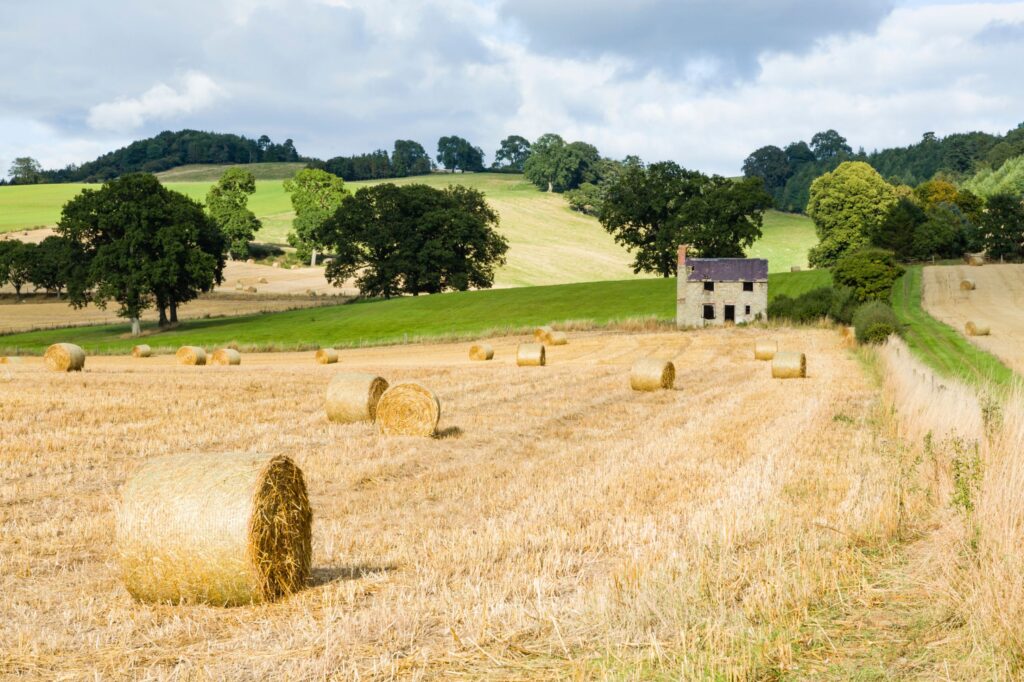
It is perfectly possible to gift farming land to a family member during your lifetime, but this is unfortunately never as simple as merely handing over the deeds. The manner in which the gift is made can have far-reaching implications for inheritance tax, capital gains tax and stamp duty, and will also affect your ability to keep farming the land afterwards. Get the paperwork right, update your will at the same time, and take advice before anything is promised.
Christmas and the associated festivities can often generate discussion amongst farming families regarding the future of the farm, and the potential of passing the business to the next generation. Those conversations matter, but a promise made around the kitchen table can cause problems later if it is not followed through properly.
Can you gift land to a family member?
Yes. You can give land to anyone, including children, grandchildren or other relatives, during your lifetime. Once the gift is complete, the land belongs to them. They can farm it, borrow against it or sell it, and you no longer have any say over what happens to it.
When considering whether to make a gift of land, it is always necessary to consider the underlying objective of the gift. Is it to mitigate inheritance tax, to securely pass on the business, or to treat children fairly? The answer will shape whether an outright gift or a gift into trust is the right route.
Ways to pass on part or whole of the farm
Gifting land outright
An outright gift transfers the land into the recipient’s name. In conceptual terms, this is the simplest option, and transfers complete responsibility and control over the land to the recipient. The land would form part of the recipient’s estate and is therefore subject to their own personal circumstances, such as divorce, debt or their own death.
Gifting a share of a farming partnership or company
If the farm is run as a partnership or through a company, you may be able to gift a share of the business rather than the land itself, so that the next generation is brought in gradually. The partnership agreement or company documents will need reviewing, and often updating, so it is clear who owns what. Our blog on farm partnerships goes into further detail on this point.
Gifting land into a trust
A trust lets you pass on the value of land while trustees keep control over how it is used and who benefits. This can protect land for the family as a whole, or for a younger generation who are not ready to own it outright. Trusts have their own tax rules, including possible charges when land goes in, every ten years and when land comes out, so they need careful planning.
Tax when you gift land
Inheritance tax and the seven-year rule
A gift of land to an individual is usually known as a ‘potentially exempt transfer’, or PET for short. If you survive for seven years after making a PET, it falls outside your estate for inheritance tax purposes. If you die within seven years, the gift is brought back into account and inheritance tax may be payable, depending on the other reliefs available.
Agricultural and business property relief on lifetime gifts
Agricultural property relief and business property relief can reduce the inheritance tax on farmland and farming businesses. The extent of relief available was reduced from 6 April 2026, so it is important to take up-to-date advice on how they apply to your farm.
For lifetime gifts, the relief is not guaranteed. If you die within seven years, relief is generally only available if the recipient still owns the land and it still qualifies at that point. If they have sold it or stopped farming it, the relief may be lost.
Capital gains tax and holdover relief
Giving land away is treated as a disposal at market value for capital gains tax, even though no money changes hands. On land that has risen significantly in value, this could create a large tax bill. Holdover relief may be available for farmland and other business assets, and for gifts into some trusts. It defers the gain so that the recipient takes on the property at the original base cost instead.
Stamp duty land tax
A genuine gift of land with nothing given in return does not usually attract stamp duty land tax. However, if the recipient takes on a mortgage or other debt secured on the land, that can count as payment, and stamp duty may then be due.
Can you gift the farm and keep farming it?
This is one of the most common questions, and where many lifetime gifts go wrong. If you give land away but continue to benefit from it, for example by farming it or living in the farmhouse without paying a full market rent, the gift may be treated as a ‘gift with reservation of benefit’. For inheritance tax, the land is then still treated as part of your taxable estate, which defeats the purpose of the gift.
There are ways to structure a gift so that you can stay involved, such as paying a proper rent under a formal agreement or farming in partnership with the recipient. These arrangements need to be set up correctly from the start.
The paperwork: transferring land at the Land Registry
A gift of land is not complete until the legal title has been properly transferred. For registered land, this means submitting a completed transfer deed to HM Land Registry, with a plan showing exactly which land is being given. Unregistered land will need to be registered first.
A separate deed of gift can also be useful. It records that the transfer is a gift rather than a sale or a loan, which evidences the arrangement from a tax perspective and can help to avoid family disputes later.
Informal promises are a particular risk. If someone has been told the farm will be theirs and has relied on that promise, they may be able to bring a claim if it is not kept. Our blog on proprietary estoppel explains how these claims arise.
Why your will needs updating too
A lifetime gift changes what is left in your estate, so your will should be reviewed at the same time. This is especially important if you want to treat children fairly, for example where one child farms and receives land now, and others are expected to inherit other assets later.
If you have not yet made a will, or it was written before the farm or your family changed, now is a good time to review it.
How we can help
Paris Smith advises farming families and rural landowners across Hampshire and the south of England on gifting land, succession planning, trusts and wills. If you are thinking about passing on land or a share of the farm, make sure to talk to a member of our tax and estate planning or agricultural team before anything is promised or signed.
We publish blogs and social media posts to give a general overview of legal and commercial issues, relevant at the time of publication, which we hope you will find interesting. Please note that legal rules often change depending on the specific facts of a situation. The law also changes over time following changes in legislation or new court cases. We do not actively update our blogs or posts once they are published to reflect changes in the law.
As such, our blogs and posts are not intended to advise you on the law and must not be relied upon as legal advice. If you require advice on a particular issue, then please contact us and we will be pleased to help.