


Inheritance, Wills, Trusts & Probate Disputes
With family structures becoming more complicated and the value of estates increasing, disputes relating to inheritance and trusts are becoming ever more common. In what is a highly specialised and often complex area, our team provides expert, supportive legal advice to individuals, professionals and charities across a range of practice areas.
CLOSE 

Our expertise covers a broad range of disputes concerning estates of deceased persons, trusts and the ownership of property, land and money. We act for private individuals, professional trustees and personal representatives and charities whether they are bringing or defending claims and can help with the following issues:
- Challenging or contesting a will
- Claims for reasonable financial provision under the Inheritance Act
- Applications to remove executors or administrators and issues with estate administration
- Poorly drafted wills and professional negligence in wills, trusts and estate advice
- Proprietary estoppel and constructive and resulting trust disputes
- Trust disputes and trustee issues
- Financial abuse of the vulnerable, misuse of powers of attorney and fraud
While the majority of claims are settled out of court – very often by mediation – we have extensive experience in guiding clients through the court process up to and including trial. Our experts work with you to support you with clear, pragmatic legal advice to help you achieve the best possible outcome. As a full-service law firm, we work closely with our Wills, Trusts and Estates, Property, Court of Protection and Family teams to provide you with a complete, complementary service.
How we work with you
Whilst based in the South of England, with offices in Southampton, Winchester and Bournemouth, Paris Smith acts for businesses and families throughout the UK. Technology has enabled us to provide a high level of service to our clients whether they are local to our offices or not. Our advice can be given in many ways:
- Over the telephone
- Online appointments
- In face to face meetings
We will talk through how you would like to be contacted and the best ways for us to meet in our early conversations with you.
CONTENTS


Introducing your key contact
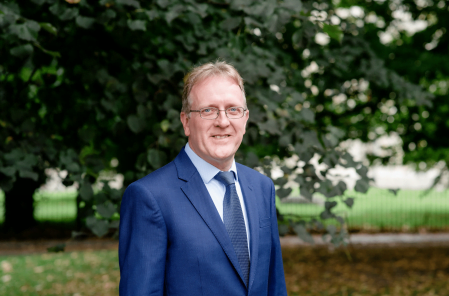
Jason Oliver
Partner – Personal Disputes and Commercial Disputes








Chambers High Net Worth Legal Directory 2022
The Chambers High Net Worth edition states: Paris Smith has a considerable team of private client lawyers able to assist with wills, estate planning and tax matters. The team can also advise on contentious estate matters.
A source says that the team has “a depth of expertise in complex estates and disputes,” while another adds: “They recognise the personal as well as the legal issues.”
Frequently asked questions
We have answered some of the more frequently asked questions we receive around contentious probate. If you have a question that is not answered below, please contact Jason Oliver.
How do I instruct you?
We are always happy to speak with prospective clients by telephone to discuss a new instruction. We will do our best to respond to your enquiry as soon as possible. In our initial conversation, we will ask you to give us details of dispute, discuss the options for dealing with it and provide you with information about our costs and terms of business. Alternatively, you can email one of the team with details of your dispute and it is often helpful to provide us with the key documents early on in the process.
Why should I instruct you?
Disputes concerning estates and trusts can be complex. The majority of our team are members of the Association of Contentious Trusts and Probate Specialists (ACTAPS) and we pride ourselves on knowing our area. Within the team, there are not many situations we have not dealt with and, on the above pages, we have provided various examples of our recent work in each practice area.
What will you do for me?
While every case is different, the ‘final destination’ is usually a trial if the dispute cannot be resolved by negotiation. Our goal is to present your case in the best way and achieve the best possible outcome for you. In every case, we will provide you with a merits assessment of your situation and work with you to devise a case strategy. We will provide you with expert advice in relation to your legal position, settlement strategy and your costs position. Most cases will also involve some or all of the following stages, which we will work with you to complete:
- Analysis of evidence and your legal position;
- Pre-action correspondence;
- Settlement negotiations, including mediation;
- If necessary, preparation of your statement of case in support of or defence of court proceedings;
- Representing you at case management and other interim hearings;
- Gathering and analysing documentary evidence;
- Interviewing you and any other prospective witnesses and preparing witness statements;
- Where applicable, obtaining expert evidence;
- Preparing for and supporting you through trial; and,
- Enforcing any decision made in your favour.
How much will it all cost?
Normally, our charges are based on the amount of time we spend on your matter and so the overall cost depends on what we are instructed to do, how the other party approaches the matter and, if court proceedings are commenced, on the directions the court gives. You may also have to pay ‘disbursements’ during the course of the dispute e.g. court fees, expert fees and barrister’s fees. The overall cost of a dispute depends largely on whether the disputes settles and at what stage. If a dispute is settled in its early stages, the overall legal costs will be much lower than if the claim proceeds to a trial. This can be a complex area of law and there is often more than one option for dealing with matters. Our role is to advise you of those options and part of that advice will be to consider the most cost-effective way of achieving the best outcome for you. We will provide you with cost estimates throughout your matter and we are usually able to provide ‘ballpark’ figures for the overall cost at an early stage.
How do I fund my legal costs?
The majority of our clients pay privately for their legal costs. In some cases, it is possible to arrange for a litigation funder to pay all or part of your legal costs and we can explore ‘After the Event’ insurance options with clients which may cover the cost of disbursements as well as providing protection against being ordered to pay another party’s costs. You may have the benefit of legal expenses insurance already and we recommend that clients check any pre-existing insurance policies they hold. Legal Aid is not available for this type of dispute and we do not usually offer conditional fee agreements.
Will I get my costs back?
The general rule in litigation is that the unsuccessful party is ordered to pay the successful party’s costs. This is a general rule and the court has discretion to decide differently. Which party ends up paying the costs depends on a number of factors; if a claim settles, this is usually part of the settlement negotiations and, if the matter is determined at trial, the judge will listen to the parties’ submissions and make an order. In particular, the judge will take into account any settlement negotiations that have taken place and the conduct of the parties throughout the litigation. Part of our work will include advising you on how to protect your costs position as much as possible to maximise the chances of recovering your costs from the other party and minimising your risk of being ordered to pay the other party’s costs. Every situation is different but we consider costs and costs recovery at every stage of the dispute.
How long will it all take?
The overall time it takes for a case to be resolved depends on various factors. Some matters are inherently more complex than others and much depends on how the other party to the dispute deals with things and on the instructions you give to us. In general, it will take 1 – 2 years for a piece of litigation to reach trial from the date the claim is issued. More complex claims with lots of documents, witnesses and the need for expert evidence can take longer and, likewise, more straightforward cases can take less time. In particular, cases involving limited factual disputes can be dealt with much more quickly. It is possible for parties to settle a dispute at any stage up to and during the trial. Whether and when a claim settles will generally be the most significant factor in determining overall timescales. We aim to provide realistic merits assessments at an early stage and consider costs and timescales with clients so they can make informed decisions about settlement. We will always consider timescales with you when you instruct us and we recognise that it is not always just about the money but that factors such as being able to move on and avoiding the stress of litigation may be just as important.
How we’ve helped our clients


 You may also be interested in
Conveyancing Solicitors
conveyancing-solicitors-auction-purchase-auction-sale-buying-a-flat-buying-a-home-buying-house-buying-property-changing-mortgage-provider-completion-of-purchase-completion-of-sale-contract-pack-develo
Tax – Inheritance, Income & Capital Gains
tax-inheritance-income-capital-gains-avoiding-capital-gains-tax-avoiding-capital-gains-tax-on-investments-avoiding-capital-gains-tax-on-property-can-i-avoid-capital-gains-tax-can-i-dis
Back
to Personal Disputes
 Back
to Personal Disputes
Back
to Personal Disputes


